Let’s start with the obvious: this article is written by one of the two sides. We are the STOK Terminal team, and a 100% neutral comparison doesn’t exist. But this comparison has a twist the others don’t: TradingView and STOK Terminal barely compete. They do different jobs, and the most honest thing we can tell you is that you probably want both.
The Core Difference: The Price vs the Business
TradingView analyzes the price. It is, without argument, the best charting and technical-analysis tool a retail investor can pay for: thousands of indicators, community scripts, patterns, timeframes, alerts. If your question is “what is the price doing?”, nothing is better.
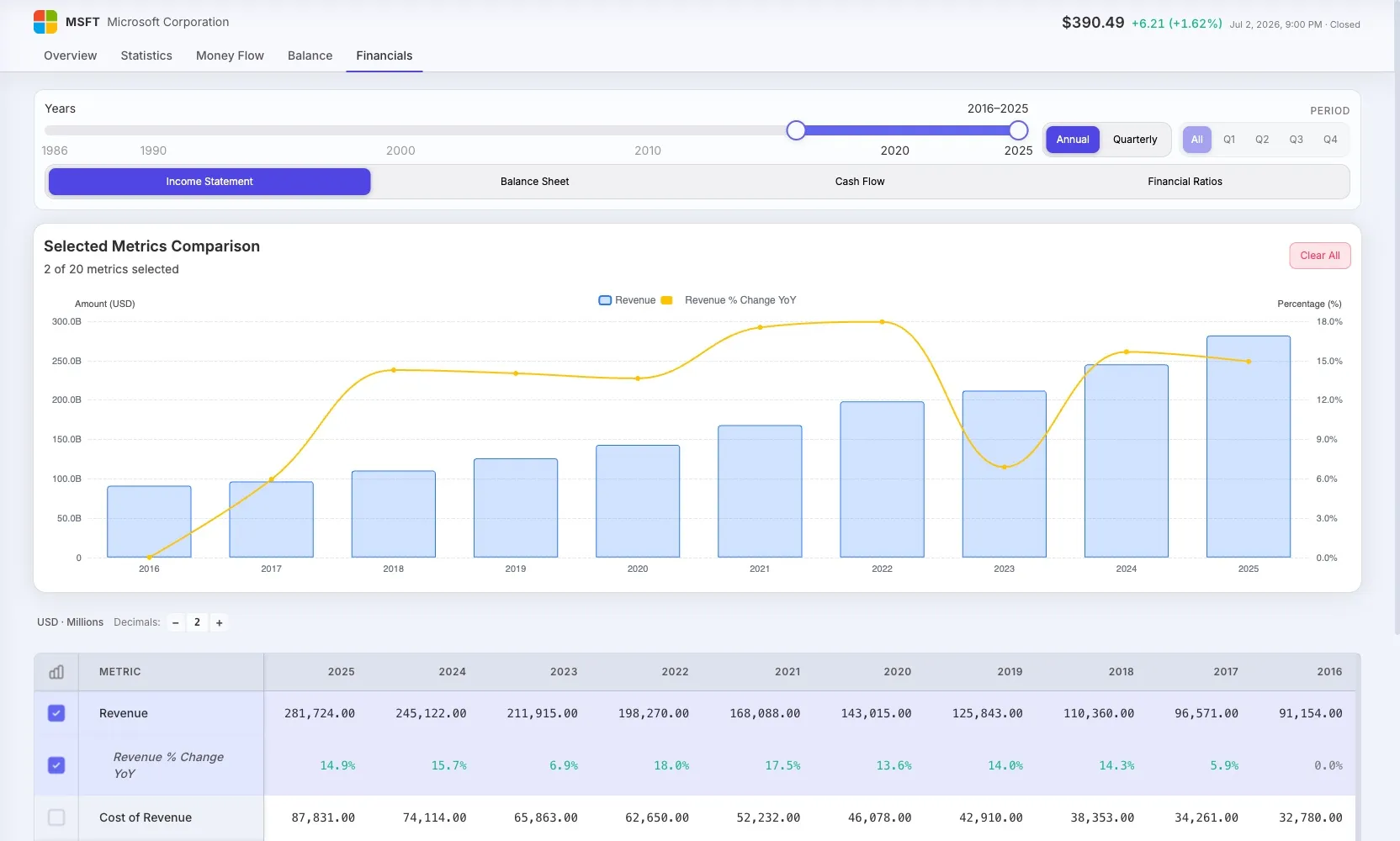
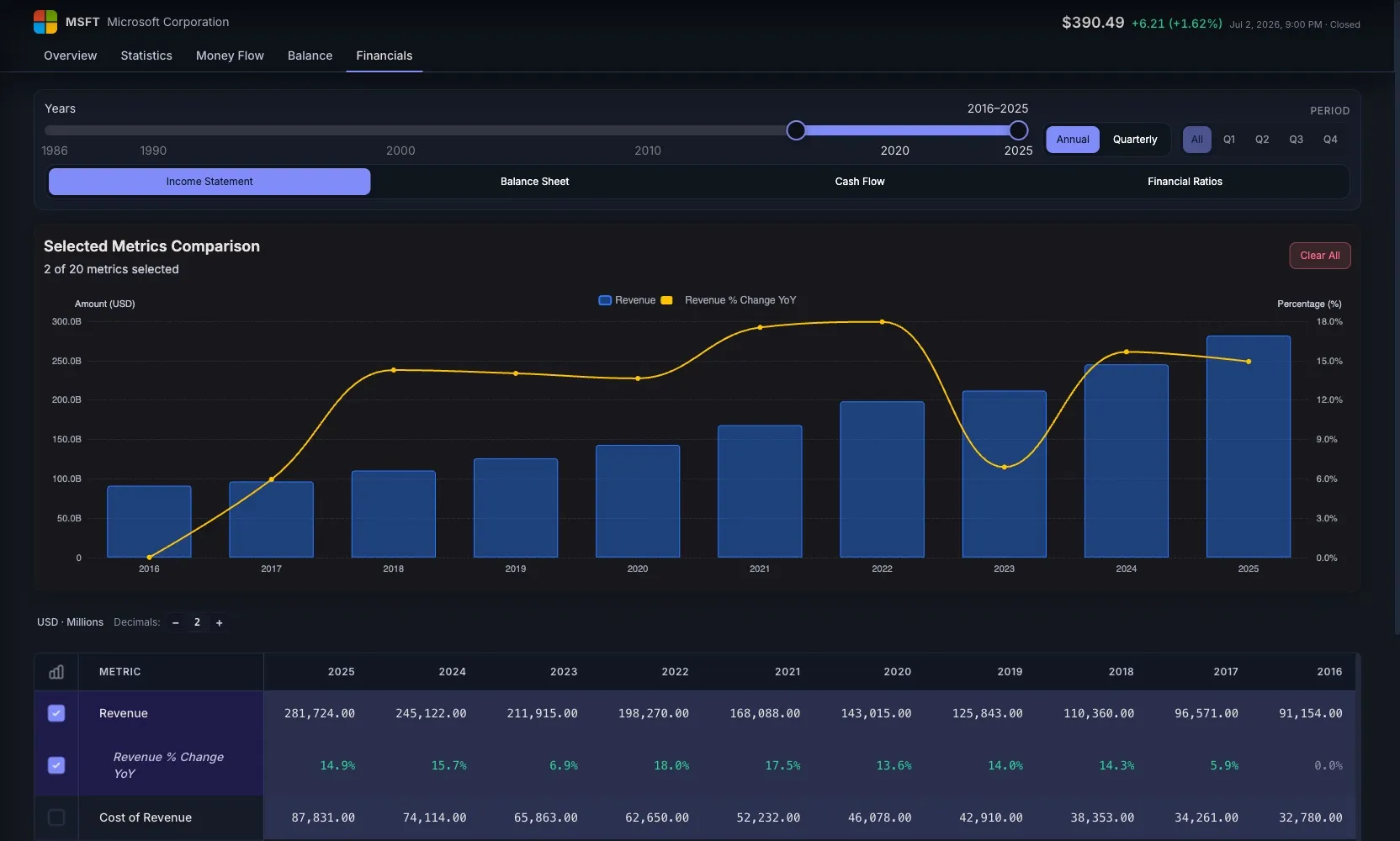
STOK Terminal analyzes the business behind the price. Income statement, balance sheet, cash flow and ratios across the years, connected to your watchlists and portfolio. If your question is “is this a good company at this price?”, a chart won’t answer it — the fundamentals will.
Neither is “better”: they answer different questions. That’s why this comparison ends, more than any other, in “use both.”
What TradingView Does Better (No Spin)
- The best charts in retail, no argument. Flexibility, speed, indicators and a community that publishes scripts for everything. Nobody comes close.
- A genuinely powerful free plan. Basic already beats what most people need to watch prices, without the ad bombardment of other portals.
- Spanish interface and a huge community, with ideas, sentiment and a social network of traders.
- Multi-asset coverage — stocks, crypto, forex, futures — with real-time market data on paid plans.
- Alerts and multi-chart for anyone who lives by timing.
If your thing is trading and technical analysis, the honest answer is: TradingView is your tool. We don’t compete there.
What STOK Terminal Does Differently
STOK Terminal is currently in early access, opened from a free list in signup order. Joining the list is free and creates no charge; we say so upfront. Early users pay €6.95/month once they activate their access — a 50% discount off the €13.90 public price — and keep that 50% discount on the future public price while their subscription remains active. If they cancel and return later, the then-current price will apply. Nothing is charged while you wait on the list, and the trial only starts when you accept your invitation.
- Multi-year fundamentals as the core, not a side panel. Where TradingView shows some financials next to the chart, we put the full statements in side-by-side comparable tables: years of margins, ROIC, debt and free cash flow you can read and question.
- The analysis flow, not the trading flow. Analyze the company → track it in watchlists → connect it to your portfolio with a transaction ledger. Built to construct an investment thesis, not to trade intraday.
- Guides that teach the method, from how to read an annual report to the full fundamental analysis guide. The goal isn’t for you to watch a chart, it’s for you to understand the business.
- Launch price in euros: €6.95/month for early users (50% off the €13.90 public price).
What we don’t have today, plainly: TradingView’s thousands of indicators and community scripts, price alerts, crypto and futures coverage, or a native mobile app (the web app works well on mobile). We don’t try to be TradingView — it would be absurd to compete with its charting ecosystem.
Why “Paying More” on TradingView Doesn’t Buy Fundamentals
An important nuance if you’re wondering whether to upgrade TradingView to analyze companies: its paid tiers don’t scale fundamental depth. They scale trader features.
| Plan | Price | What it adds (trader focus) |
|---|---|---|
| Basic | Free | 1 chart, basic indicators |
| Essential | €12.95/month | 2 charts, 5 indicators, 20 alerts |
| Plus | €29.95/month | 4 charts, 10 indicators, 100 alerts |
| Premium | €59.95/month | 8 charts, 25 indicators, 400 alerts |
| Ultimate | €199.95/month | 16 charts, 50 indicators, 1,000 alerts |
As you can see, paying more buys more charts, more indicators and more alerts — never better ROIC history or comparable statement tables. We expand on this in TradingView for fundamental analysis.
Comparison Table (July 2026)
| TradingView | STOK Terminal | |
|---|---|---|
| Main strength | Charts and technical analysis | Multi-year fundamental analysis |
| Question it answers | What is the price doing? | Good business at this price? |
| Financial statements | Basic data next to the chart | Full multi-year statements in tables |
| Pre-calc ratios (ROIC, FCF…) | No | Yes — the core of the product |
| Watchlists / portfolio | Powerful watchlists; basic portfolio | Watchlists + integrated portfolio with transaction ledger |
| Charts and indicators | Best in retail | Advanced candlestick chart included (fundamentals remain the focus) |
| Language | Spanish interface | Spanish + English site and guides |
| Billing | EUR (free / €12.95–199.95/mo) | EUR (€6.95/mo for early users; €13.90 public) |
| Product status | Mature, industry reference | Early access |
When to Choose Each
Choose TradingView if:
- You trade or do technical analysis and the chart is your central tool.
- You follow crypto, futures or forex on top of stocks.
- You want a huge community of ideas and scripts.
Choose STOK Terminal if:
- You invest for the medium-to-long term and decide on fundamentals, not the chart.
- You want multi-year statements, pre-calculated ratios and the analysis → watchlist → portfolio flow.
- You prefer paying in euros and learning the method with Spanish-language guides.
Use both if: (the most common case) you want TradingView’s chart for the price and timing, and STOK Terminal to decide whether the business behind it is worth it. It’s the combination we openly recommend.
Frequently Asked Questions
What is the main difference between STOK Terminal and TradingView? Discipline. TradingView is the best charting and technical-analysis tool in retail investing — prices, indicators, patterns. STOK Terminal is a fundamental-analysis workbench: multi-year financial statements, ratios, watchlists and portfolio. One analyzes the price; the other, the business behind the price.
Is TradingView good for fundamental analysis? Only to a limited extent. It shows some financial data, but its paid plans scale charts per tab, indicators and alerts — trader features, not financial-statement depth. A Premium plan at €59.95/month gets you 8 charts and 400 alerts, not better ROIC history.
Which is cheaper, STOK Terminal or TradingView? TradingView has a free Basic plan; paid plans run from Essential €12.95/month to Ultimate €199.95/month (Spain/EU version, verified July 2026). STOK Terminal is €6.95/month at the launch price on activating access (€13.90/month public). Both bill in euros.
Can I use both? Yes, and it is the recommended setup: TradingView for the chart and timing, STOK Terminal to decide whether the business behind the chart is worth it. Most fundamental investors use TradingView to watch the price and another tool to analyze the company.
The Chart or the Business?
Ideally you have both. For the fundamental side, we are building STOK Terminal: multi-year statements, watchlists and portfolio in one flow, in euros with Spanish-language guides.
Join STOK Terminal free — 14 days free when you activate your access and a 50% discount for as long as your subscription stays active.
Transparency
Comparison written by the STOK Terminal team — keep that in mind as you read. TradingView prices (Basic free, Essential €12.95, Plus €29.95, Premium €59.95, Ultimate €199.95/month) were checked on its official website, Spain/EU version, on July 4, 2026; they may vary with promotions, by region or with annual billing. Confirm current numbers on tradingview.com before subscribing. This article is informational and not financial advice.